Feelconomy and Emotional Consumption: The Economy of K-culture Fandom and Human-Centered Identity
This article looks at how feelconomy, where emotions drive purchasing decisions, is reshaping Korean society and the K-culture industry in 2026. It also explores how this consumer trend connects to the search for human-centered identity in the age of AI.
One of the keywords drawing the most attention in Korean society and the global K-culture fandom scene in 2026 is “feelconomy.” Fans are buying merchandise tied to artists and brands they love, showing up for immersive exhibitions, and turning emotion-led spending into a cultural phenomenon of its own. The idea is gaining traction because it lines up with a broader desire to value human feeling and personal fulfillment in an era where AI has become part of everyday life.
Feelconomy is a portmanteau of “feel” and “economy,” and it refers to a consumer pattern in which mood and emotion shape purchasing decisions. What matters most is not always function or price, but whether something brings joy, comfort, or a sense of personal meaning. In that sense, it is less about impulse buying than about using consumption to express oneself and connect with others through emotion.
This shift was also identified as a major keyword in “Trend Korea 2026,” the annual consumer-trend report led by professor Kim Ran-do. In that framework, feelconomy appears as one of the key themes within “HORSE POWER,” a set of concepts meant to explain how emotion is reshaping both consumption and the market itself. Like the report’s other themes, it speaks to the tension between rapid technological change and the effort to preserve something recognizably human.
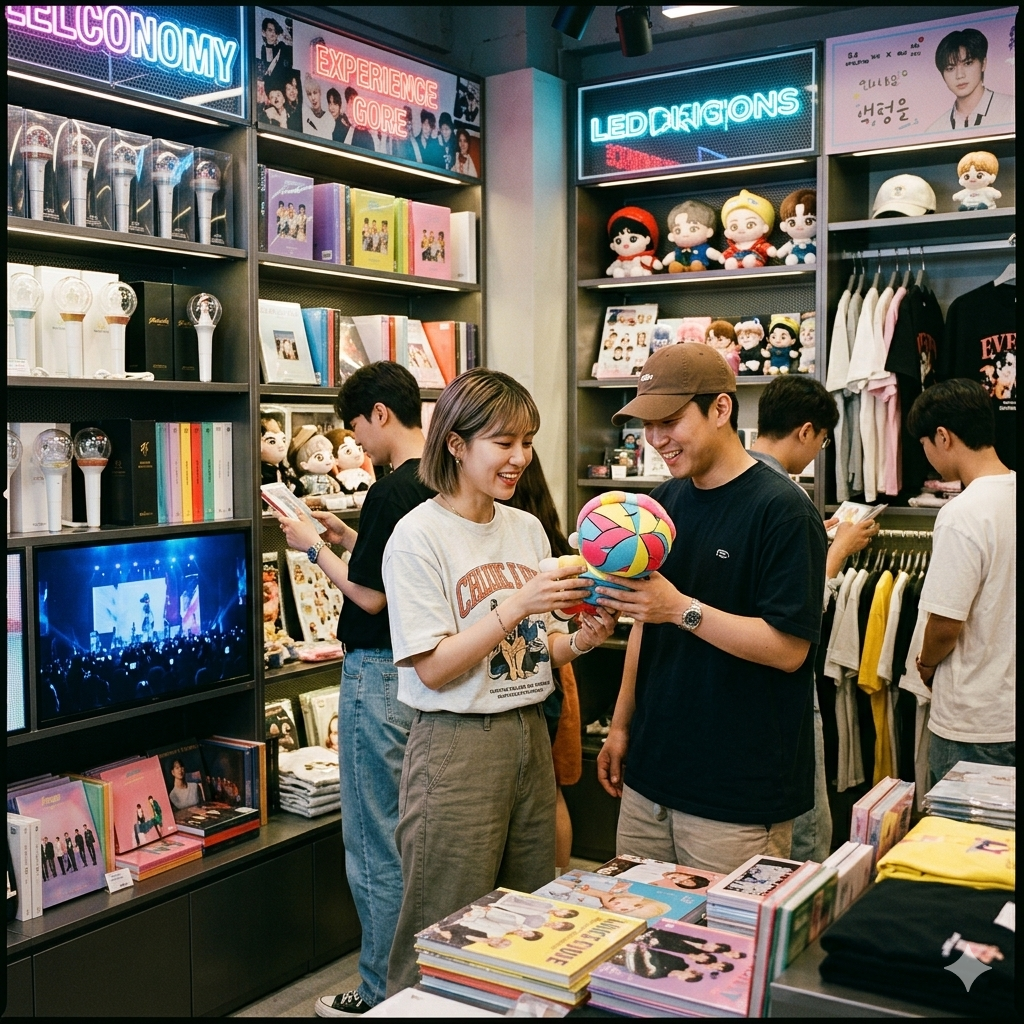
Feelconomy has become especially visible alongside growing pride in K-culture, because fan-led consumption now produces clear economic effects. The emotional immersion people feel when they attend K-pop concerts or exhibitions often leads to merchandise purchases, travel plans, and further spending, while the excitement shared online helps fuel the next wave of demand. As references to K-culture continue to rise, emotional resonance is increasingly feeding into tourism, goods, and cultural commerce in a self-reinforcing cycle.
In practice, fans build powerful emotional bonds not only through music and dramas, but also through products and spaces. Buying limited-edition albums and character goods, visiting narrative-driven pop-up stores, and taking part in fan-centered events are all examples of emotional consumption at work. The purchase is not just about the item itself, but about deepening a sense of excitement, belonging, and shared identity within a community.
At a time when AI is becoming widespread, many people are asking not only how to use technology, but how to protect human-centered values. That concern has expanded beyond efficiency and automation into a broader conversation about emotion, creativity, and what still feels distinctly human. Feelconomy sits squarely within that conversation, because it highlights emotional satisfaction and empathy as values technology cannot fully replace.
At the same time, the growing emphasis on “living as myself” has encouraged people to make purchases based less on external expectations and more on personal meaning. Decorating a room with artwork or distinctive goods that reflect one’s taste, or supporting a brand that feels personally meaningful, are part of that shift. Consumption here becomes more than possession; it becomes a way to show identity and values.
Socially, too, smaller communities built around shared feelings and taste are becoming more important than large institutions. In fandom groups and intimate communities organized around common interests, people exchange emotional support and a sense of recognition. In that environment, feelconomy acts as a bridge between personal pleasure and collective belonging, which is why brands and content built around experience and emotional connection are receiving more attention.
For international readers, one possible point of confusion is how feelconomy differs from ordinary emotional marketing. The distinction is that feelconomy describes a broader economic pattern in which emotion becomes the center of consumer decision-making itself. It is also different from other trend-report terms such as “zero-click” or “price decoding,” which focus more on convenience or price transparency than on feeling.
Emotional consumption is tied not only to the commercial power of K-culture, but also to the search for human-centered identity in the age of AI. Feelconomy shows that consumption can function as more than a transaction; it can become a way of understanding oneself, connecting with others, and building meaning. As this trend continues to spread through cultural industries and daily life, it points to a future in which human-centered values matter more, not less.