
In Seoul, one of the more unexpected places drawing attention lately is a cafe set beside a waterfall. Along Hongjecheon, a tributary of the Han River, visitors have been flocking to Cafe Pokpo, where they can sit with a drink and look out over a dramatic curtain of water in the middle of the city. Photos and short videos of the spot have spread widely online, often paired with Korean expressions that describe zoning out while watching water or simply letting your mind drift. As that mood caught on, Cafe Pokpo began attracting not only locals but international visitors as well.
The waterfall itself is not a natural one. It was created in 2008 as part of a public effort to restore the Hongjecheon stream, and at 25 meters high and 60 meters wide, it gives the area a surprisingly bold visual presence. In 2022, Seoul repurposed an aging parking lot and warehouse site across from the falls into a riverside cultural space, opening Cafe Pokpo together with a small bookstore and reading room. What had once been overlooked urban infrastructure was reimagined as a place to pause, rest, and spend time by the water.
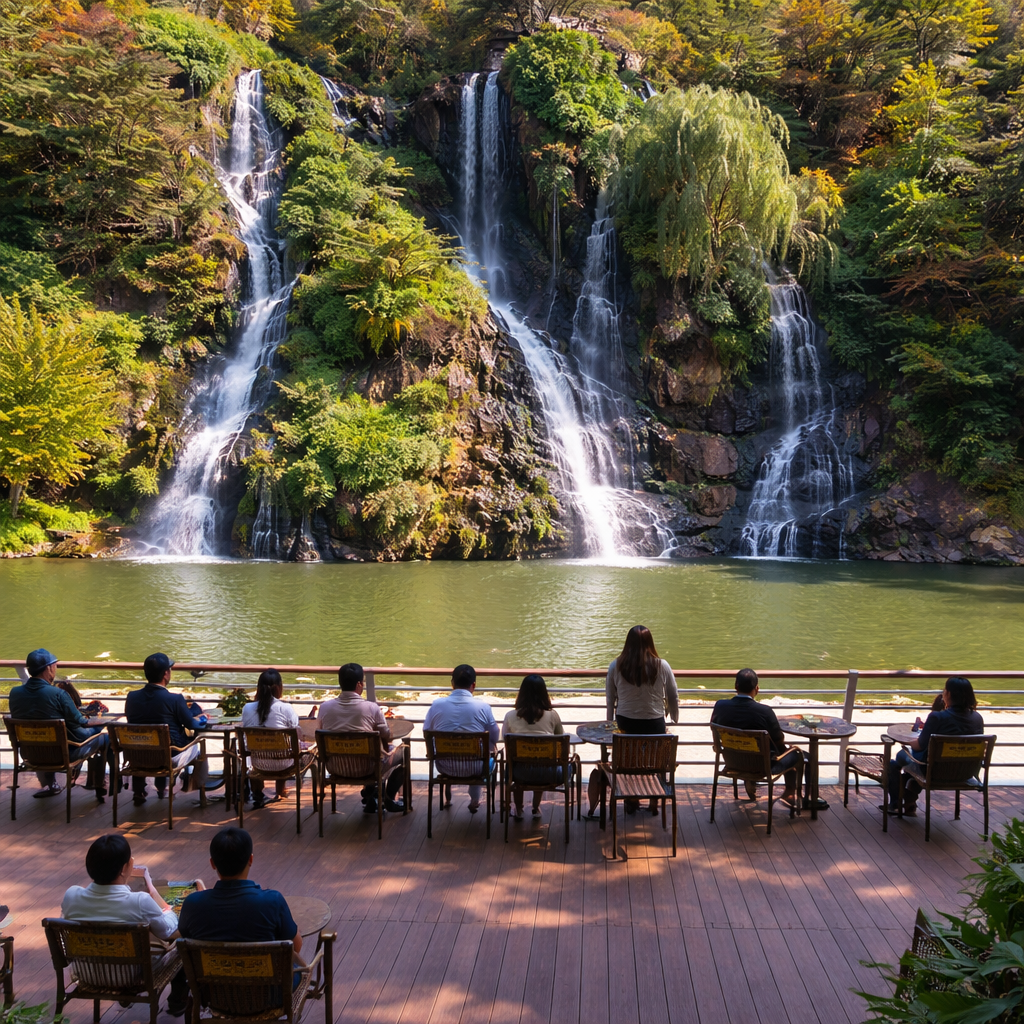
(This image was AI-generated and may differ from reality.)
That transformation is a big part of the cafe's appeal. Cafe Pokpo is designed with large glass windows and a spacious outdoor terrace, allowing visitors to sit with coffee or tea while listening to the sound of the falling water. Next door, the compact library space offers another reason to linger, and the surrounding walking paths make it easy to turn a short cafe stop into a slower riverside stroll. Together, the cafe, the books, and the stream create a setting that feels noticeably different from the usual Seoul coffee shop experience.
What makes the place stand out, though, is that it has come to mean more than just a scenic cafe. The district has positioned Cafe Pokpo as part of a broader effort to revitalize the waterfront and strengthen the neighborhood economy. Revenue from the cafe has also been linked to scholarship support for local students, which gives the space a more community-minded identity. In that sense, a visit here is often framed not only as a relaxing break but also as a small way of contributing to the area around it.
Social media has played a major role in turning the cafe into a destination. The combination of the waterfall, the open terrace, and the surrounding greenery makes it an easy place to photograph, and many first-time visitors are surprised to find a setting like this tucked into the city. It has since been introduced on official tourism channels as one of the standout waterfront spots along Hongjecheon, and that visibility has helped turn it into a regular stop for travelers looking to see a quieter, more atmospheric side of Seoul.
There are a few details worth keeping in mind before visiting. Because the waterfall is artificial and operates through a recirculating water system, the flow can vary depending on weather or maintenance conditions. Weekends and peak travel periods can also mean longer waits, especially when the cafe is at its busiest. The nearby walking route includes stairs and sloped sections, so comfortable shoes make the visit easier if you plan to explore beyond the terrace.
The numbers behind the cafe's rise are also striking. In a relatively short time, visitor counts have grown into the millions, and the share of international guests has steadily increased as well. That suggests Cafe Pokpo has moved beyond being a neighborhood curiosity and become part of Seoul's broader tourism map. Its appeal lies in how many things it manages to bring together at once: water, design, public space, rest, and a sense of local connection.
In the end, Cafe Pokpo is less about the drink itself than the atmosphere surrounding it. By pairing an urban waterfall with a riverside cafe and a small book space, Seoul has created a place that feels restorative without trying too hard to be spectacular. It is a good example of how urban renewal can become something people genuinely want to spend time in. For visitors, stopping by means more than grabbing a coffee. It offers a chance to experience a softer, more reflective side of the city.