Yeosu 2026 World Island Expo: 365 Islands Become a Living Exhibition
From Sept. 5 to Nov. 4, the 2026 World Island Expo in Yeosu will transform 365 islands into a living exhibition. Immersive pavilions, coastal trails, and flying taxis offer a glimpse of the ecological and cultural future of islands.
From September 5 to November 4, 2026, Yeosu in South Jeolla Province will host the world’s first island-themed expo across 61 days, using 365 islands and the surrounding sea as its stage. Branded as the Yeosu 2026 World Island Expo, the event is designed to turn the islands themselves into exhibition spaces where visitors can experience both nature and culture at once.
The expo’s theme is “Island, Connecting the Ocean and the Future,” and its aim is to reintroduce the ecological and cultural value of islands through Yeosu’s striking archipelago. With countless islands scattered off its coast, Yeosu offers a landscape and way of life that are difficult to encounter on the mainland, making it a fitting place to show the world what islands and the sea can represent.
The main venue will be set up in Jinmo District on Dolsan Island, where visitors will move through themed halls devoted to ecology, the future, and island culture, alongside immersive media-art experiences. Each space is meant to show the past and present of island ecosystems, while also imagining what their future could look like through technology and creativity.
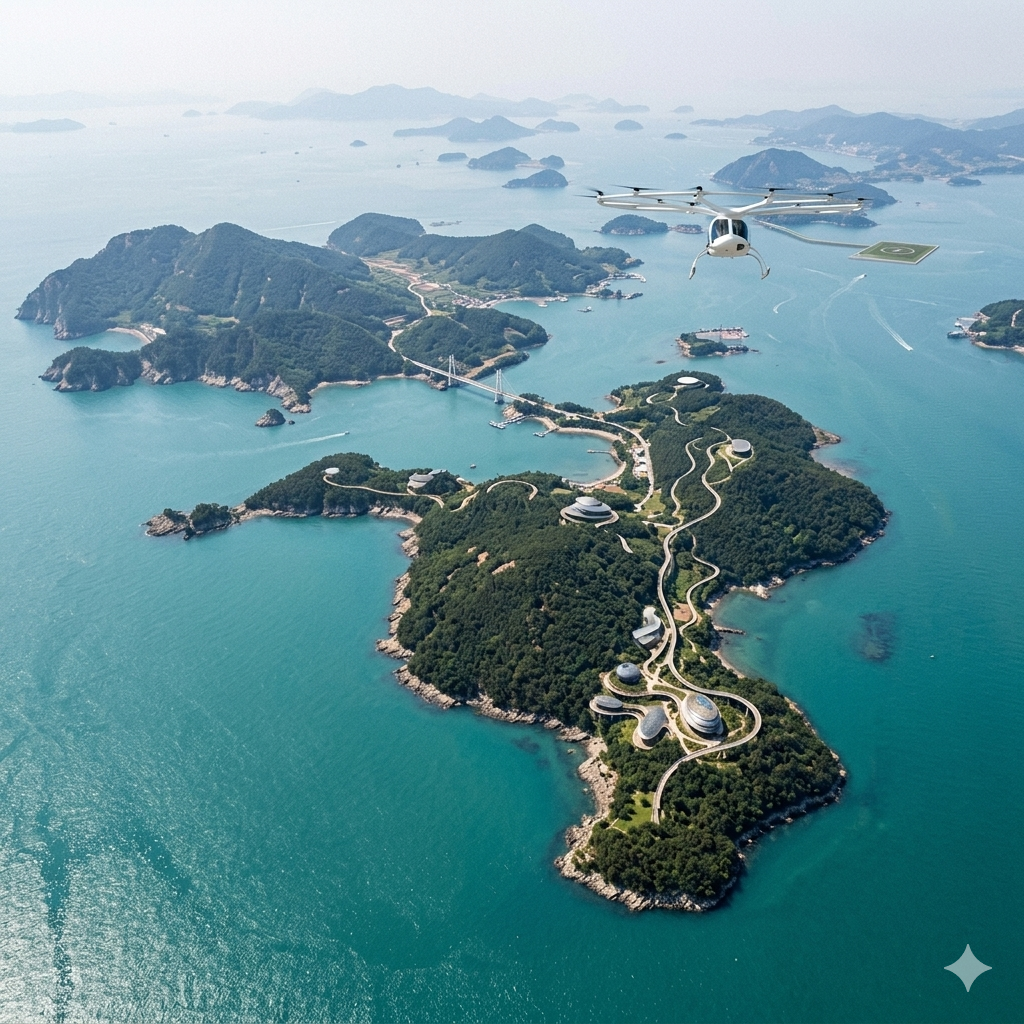
On Geumodo and Gaedo, the auxiliary venues take a different approach by turning the islands themselves into the attraction. Visitors will be able to walk along the coastal Bireong-gil trail and take in cliffs and sea views, while programs such as camping, kayaking, and mudflat experiences bring island life into closer focus.
One of the expo’s most distinctive elements is its look at future transportation. Advanced Air Mobility, often described as flying taxis, and Wing-in-Ground craft that skim over the water will be on display, with demonstrations planned to show how travel between islands could change in the years ahead.
Organizers are aiming to welcome roughly 30 countries and about 3 million visitors, and several countries and international organizations have already confirmed their participation. Those figures are still targets rather than fixed outcomes, but the growing international interest suggests that Yeosu is likely to draw significant attention as the event approaches.
The expo is meant to be more than a tourism festival. Through exhibitions and performances centered on marine ecology and the sustainability of island culture, it also raises awareness of issues such as climate change and rising sea levels, while introducing the traditions and everyday ways of life that island communities have preserved over time.
Yeosu is also preparing the infrastructure needed to connect these experiences more smoothly. A new scenic tourism route, Baekri-seomseom-gil, is being developed to improve access between islands, and local residents and volunteers are actively helping with preparations, from welcoming visitors to taking part in environmental clean-up efforts.
It is easy to confuse this event with the 2012 Yeosu Expo, but the new island expo is fundamentally different in that the islands themselves are the main subject. At a moment when sustainable tourism and marine conservation are becoming more important around the world, Yeosu’s experiment is drawing attention as a possible new model for thinking about the future of islands.
By turning 365 islands into one vast exhibition space, the event promises an experience where nature, technology, and culture meet. For international readers, it offers a rare chance to encounter island life and next-generation mobility in one place, while also reconsidering what islands mean and what they may represent in the future.