From US Army Base to Urban Park: Yongsan Children's Garden Opens to All
A former US military site in central Seoul became freely accessible at the end of December 2025, after Yongsan Children's Garden dropped its reservation system. Here is a look at the garden's history, why access changed, and what comes next.
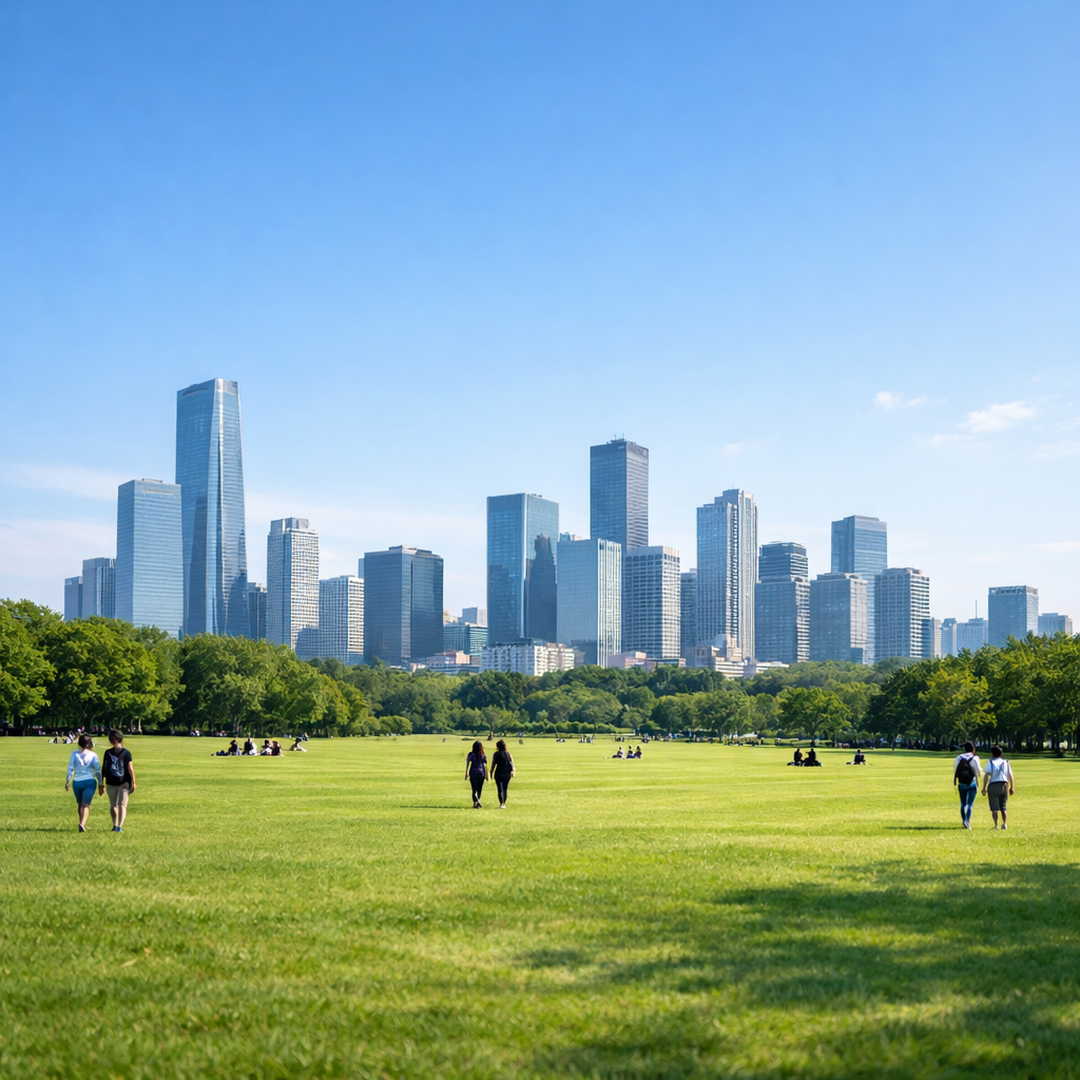
On weekend afternoons, Yongsan Children’s Garden in Seoul now feels like an easy extension of city life, with families and couples strolling across its lawns. A site that once formed part of a vast US military base has been remade into open grass, wide skies, and a new breathing space in the middle of the city. Now that visitors no longer need reservations or identity checks, interest has grown among both locals and travelers.
The Yongsan Park project carries heavy symbolic weight because it represents land once occupied by the US military being returned to public use. As part of that larger process, Yongsan Children’s Garden first opened on a temporary basis in May 2023, centered around a 70,000-square-meter lawn. The broader returned site, roughly 300,000 square meters in total, is expected to become part of Yongsan Park over time, and this garden is its starting point. Since opening in 2023, it has drawn more than 1.8 million visitors, a clear sign of how much demand there is for accessible green space in Seoul.
For a while, though, getting in was not simple. Visitors had to make reservations online and go through identity verification and security screening because the area sat close to the presidential office and defense-related facilities. Critics also argued that the garden’s child-centered programming and controlled entry system limited how freely the space could actually be used. Even so, people kept coming, drawn by the idea of a park inside a place long closed off from everyday life.
That changed on Dec. 30, 2025, when the Ministry of Land, Infrastructure and Transport announced that Yongsan Children’s Garden would be fully opened to the public. With the reservation system gone, the site now operates from 9 a.m. to 6 p.m. Tuesday through Sunday, with Saturday hours extended to 9 p.m. Monday remains closed, but seasonal night programs such as “Walking the Path of Memory with Light” have added another layer to the experience by using media art to interpret the history and culture of the returned land. Removing the hassle of advance procedures has made the park far easier to visit for residents and foreign travelers alike.
The government has also signaled that full opening is only one part of a broader reset. Because the current name, Yongsan Children’s Garden, is seen by some as sounding too narrowly focused on children, officials plan to collect public feedback and choose a more inclusive name in the first half of 2026. A committee will also be set up to improve budget transparency, while regular air and soil monitoring is expected to be carried out and made public. All of this suggests that the site is being positioned not just as a temporary park, but as a step toward the future identity of Yongsan Park.
As access has become easier, the garden is starting to function less like a controlled showcase and more like a real urban commons. People can stop by for a walk, spread out on the grass, or simply spend time outdoors without planning ahead. Together with other sections of the returned land, including the former officers’ housing area, it has begun to define a new kind of park experience in central Seoul. Night programs and cultural events have also helped it move beyond being just another lawn.
At the same time, the site remains tied to a more difficult conversation. Environmental groups and some experts have continued to raise concerns about soil contamination, arguing that land with a long military history should be fully remediated before being embraced as public parkland. In response, the presidential office has said the Yongsan Park plan will be reviewed and improved, while the land ministry has pledged continued environmental monitoring and further management measures. For visitors, that means the garden is best understood as both a public amenity and an unfinished project.
Internationally, Yongsan Children’s Garden fits into a broader pattern of military land being reimagined as civic space. Like Berlin’s Tempelhof or San Francisco’s Presidio, it shows how a site shaped by war, security, and national division can be absorbed into ordinary urban life. For overseas readers, it is also useful to distinguish Yongsan Children’s Garden from Yongsan Park as a whole: the former is a temporarily opened section, while the latter is the larger long-term park project. That distinction matters if you are trying to understand what exactly is open today.
If the wider Yongsan Park plan moves forward, the area could eventually form a major green axis linking central Seoul in new ways. There is still no fixed completion date, but public participation through naming discussions and environmental disclosure is likely to remain part of the process. Questions about when more of the returned land will open, and how the temporary sections will be managed in the meantime, are still very much alive.
In that sense, the full opening of Yongsan Children’s Garden is more than a simple park update. It tells a bigger story about how Seoul and modern Korea are trying to turn a former military zone into shared civic space. The transformation carries the promise of urban regeneration and public access, but it also brings ongoing questions about safety, transparency, and what it means to return land to the public. Visitors can enjoy the space as it is now, while also paying attention to the larger changes still unfolding around it.