Balancing Independence and Connection: The 1.5-Household Lifestyle
Emerging alongside the rise of single-person households, the 1.5-household model adds a 0.5 layer of connection to independent living. From parent-supported living to independence-oriented arrangements and co-living homes, here is how 1.5 households are reshaping housing and consumption patterns in Korea.
In recent years, single-person households have surged in Korea, bringing new attention to how people choose to live on their own. Heading into 2026, one phrase in particular has started to stand out: the “1.5 household.” It describes a new lifestyle in which people keep their independence but share selected parts of daily life to ease loneliness and financial pressure.
A 1.5 household is, quite literally, a one-person household with an added 0.5 layer of connection. It sits somewhere between living entirely alone and fully merging into a traditional family unit. People keep their own rooms and routines, while sharing selected parts of life such as meals, housing costs, or common spaces. The model reflects a growing desire to protect privacy and freedom while still maintaining a loose sense of belonging with family, neighbors, or friends.
One common version is the parent-supported type. A young adult may live independently near the family home, while still receiving side dishes, daily necessities, or occasional help from parents. For them, independence does not mean total separation. It is a way to reduce financial strain while keeping a sense of emotional stability close at hand.
Another version is the independence-oriented type. A couple or two close friends may share the same space during the week, then return to their own homes on weekends. Work or school can make weekday co-living practical, but weekends remain reserved for personal routines and private rest. Many people describe this arrangement as “living together, but separately.”
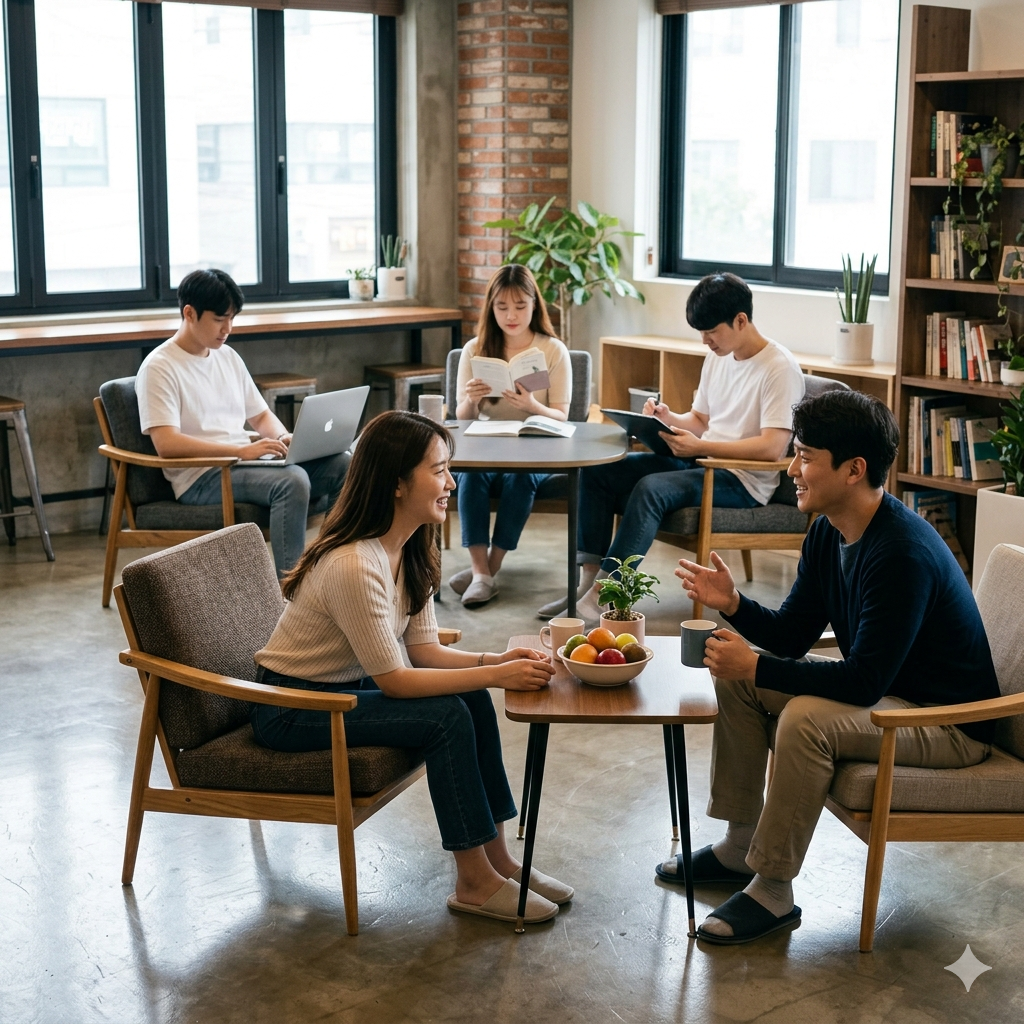
The facility-utilization type is most visible in co-living homes. Residents have private rooms where they can sleep and work, while sharing larger amenities such as lounges, gyms, or small screening rooms. They also join house-run programs like brunch gatherings or hobby events, which create opportunities to meet others without giving up personal space. It is a setup that offers both community and retreat.
The appeal of 1.5 households is not hard to understand. Seoul’s co-living market has recently posted double-digit annual growth, with more than 7,000 households and occupancy rates in the 90 percent range. Most residents are in their 20s and 30s, many of them looking for a way to secure personal space in an expensive housing market. At the same time, they want to ease loneliness and reduce fixed living costs, which is why both parent-supported living and co-living options are gaining traction.
The term can also be misunderstood. It does not mean a household made up of “one and a half people,” nor is it the same thing as the usual roommate setup or traditional boarding arrangements. Roommates typically share much more of daily life, while 1.5 households prioritize personal space and financial independence, only sharing what feels necessary. Without that distinction, the concept can easily be mistaken for simple cohabitation.
This shift is also changing how people consume. Startups are launching products such as premium meal kits and subscription services designed around portions for one and a half people, easy to split between two without feeling excessive. Co-living operators are strengthening community programs to improve resident satisfaction, while digital platforms are emerging where people in 1.5-household arrangements exchange lifestyle tips, services, and practical information.
Experts often compare the 1.5 household to a modern version of boarding culture, pointing to both its strengths and its limits. It can reduce housing costs and loneliness, but it also raises questions about how to manage conflict and protect privacy in shared spaces. Some observers link it to declining marriage or birth rates, but there is not enough evidence to make that kind of claim with confidence. The trend is better understood as a flexible response to changing social conditions.
In the end, the 1.5 household is one expression of a broader search for balance between independence and connection. It is reshaping not only housing, but also consumption and the way relationships are organized in everyday life. For people trying to find a structure that fits their own rhythm, it offers a new set of options. Watching where this trend goes next may also tell us a great deal about the future of urban living in Korea.