Why Banana Milk Has Become a Must-Buy for Foreign Travelers in Korea: From Convenience Stores to Social Media
Banana Milk became a must-buy for travelers in Korea, with its iconic bottle, convenience-store visibility, and viral latte spin helping drive demand.
These days, it is not unusual to see travelers landing in Korea and heading straight for a convenience store before doing much of anything else. And the first item many of them reach for is not a flashy souvenir, but a simple bottle of Banana Milk. That bright yellow bottle has quietly become part of the Korean travel experience, and even in Korea, people have started paying attention to why it holds such a strong appeal for foreign visitors.
Convenience stores have become one of the easiest ways for travelers to get a feel for everyday life in Korea, and trying Banana Milk has come to symbolize a kind of “live like a local” moment. That image is backed up by sales data as well. In CU’s 2025 analysis of purchases by foreign customers, Banana Milk ranked as the top item among international visitors, showing just how closely the drink has become tied to the tourist experience.
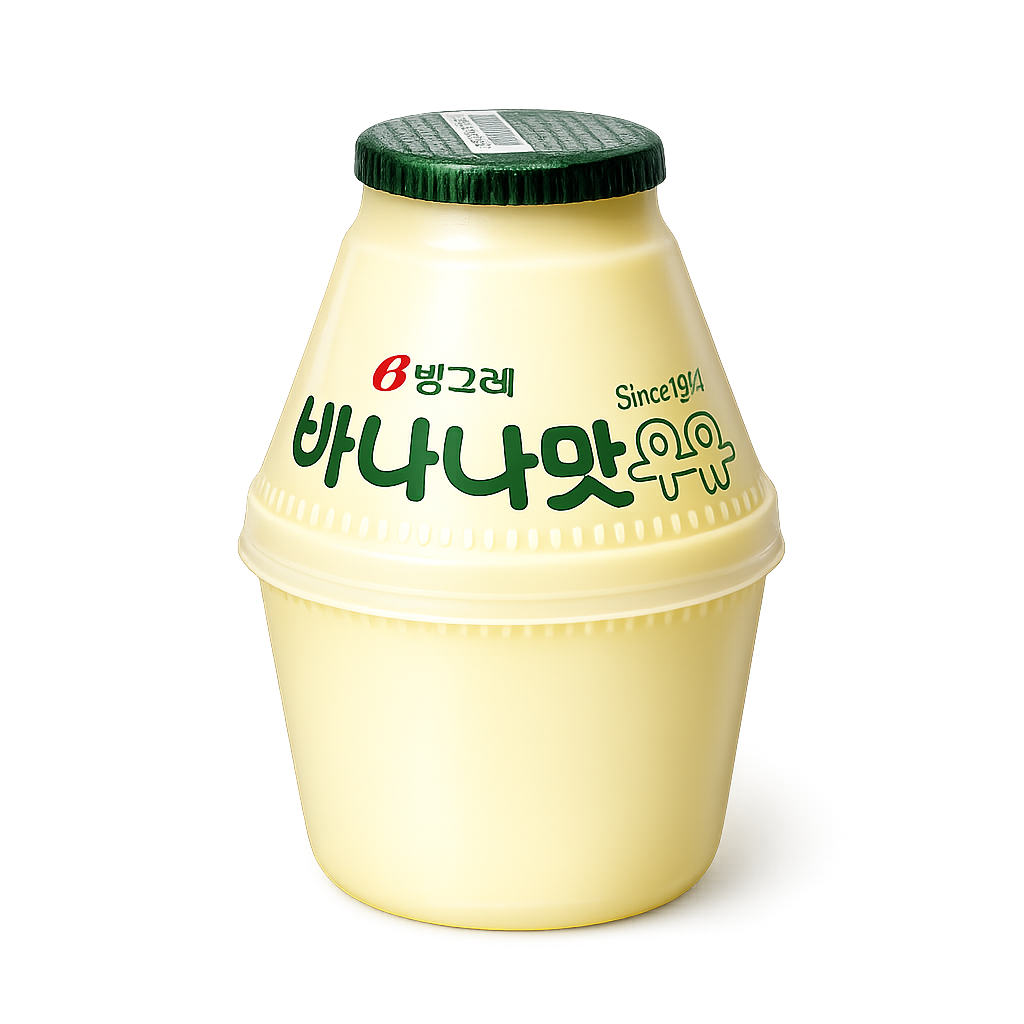
Banana Milk is a processed milk drink first introduced by Binggrae in 1974. It is known for its sweet banana flavor and its distinctive yellow plastic bottle inspired by the rounded shape of a traditional Korean moon jar. In Korea, it is such a familiar product that it has even picked up affectionate nicknames over the years. It remains one of the country’s most recognizable packaged drinks, with daily sales reportedly exceeding one million units.
What draws overseas visitors, though, is not just the taste. The bottle itself is small, easy to carry, and visually memorable, while the price stays low enough to feel like an easy impulse purchase. It does need refrigeration, but for travelers shopping on the way out, that is less of a problem. Bought at the airport shortly before departure, it becomes a perfect last-minute item: simple, portable, and unmistakably Korean.
The scale of that demand shows up in the numbers. According to CU, sales of Banana Milk purchased through foreign payment methods such as Alipay and WeChat Pay at airport locations rose by 72.9 percent in 2025 compared with the previous year. At GS25 stores in Incheon Airport, average daily sales reportedly exceeded 1,200 bottles. Retail reports have even described travelers buying multiple bottles at once, sometimes packing them in ice bags to take along.
Part of the appeal is that Banana Milk is no longer just a snack or drink. It has become an experience. Social media is full of short videos showing travelers at Incheon Airport convenience stores buying Banana Milk, iced Americano, and a cup of ice, then combining them on the spot to make a “banana milk latte.” The format spread like a meme, and interest grew far beyond Korea. One overseas study found that searches for “banana milk latte” rose 143 percent quarter over quarter in the third quarter of 2025, while the restaurant-review platform Yelp saw searches for the term jump 1,573 percent over the previous year.
Some overseas readers may assume this is a traditional Korean drink, but it is more accurate to think of it as a modern banana-flavored milk product that gradually became part of Korea’s emotional pop-cultural landscape. It was originally created during a period when the government wanted to encourage milk consumption, but over time it evolved into something quite different: a small, recognizable object that now functions as a “Korea feeling” item for visitors. Part of the charm is also that products quite like it are hard to find in many other markets.
The bottle design matters too. Industry observers often say the rounded, squat container feels collectible because it resembles the silhouette of a Korean moon jar while also standing out instantly on a convenience-store shelf. Interestingly, export versions are usually sold in sterilized carton packs for shelf-life reasons, so the product that many tourists buy in Korea does not always look the same as the version available abroad.
The recent rise of banana-milk-and-coffee recipes has only reinforced the boom. After seeing videos of people mixing Banana Milk with hazelnut coffee or espresso, many visitors now arrive in Korea already planning to try it for themselves. Analysts often describe that kind of behavior as part of “modisumer” culture, a blend of “modify” and “consumer,” where people enjoy customizing familiar products into something new.
The popularity has influenced corporate strategy as well. Binggrae has developed sterilized versions that can be stored at room temperature for more than nine months and now exports them to more than 30 countries, including the United States, China, and Canada. The company has said that more than 90 percent of its export volume comes from these long-shelf-life products, suggesting that it is actively responding to demand from consumers who want to recreate the experience they first had while traveling in Korea.
That said, Banana Milk does not always hold the top spot in every ranking. Some recent reports suggest that products such as Dubai chocolate have overtaken it in certain convenience-store sales rankings among foreign shoppers, pushing Banana Milk into second place. In other words, its exact standing can shift depending on the retailer and the moment.
In the end, the Banana Milk craze is about more than one sweet dairy drink. It is an example of how Korea’s convenience-store culture and the mechanics of social-media virality can turn an everyday product into a travel ritual. The drink is easy to buy, easy to photograph, and easy to associate with a certain idea of Korea. That is why taking a photo with a bottle of Banana Milk in a Korean convenience store has come to feel, for many travelers, like one of the quickest and sweetest ways to say they have really arrived.