Korean Convenience Stores in the Age of Saturation: How Running Stations and Dessert Labs Are Reinventing the Format
Facing fewer store openings and slowing growth, South Korea's convenience store chains are searching for a new breakthrough through experiential concept stores like the Han River-focused Running Station and the dessert-led Dessert Lab. Here's how these spaces are being built and why they are spreading.
South Korea’s convenience store market expanded quickly for years, but it has now entered a saturated phase marked by fewer outlets and slower growth. According to government data, the country’s major chains saw their store count decline in 2025 for the first time, while sales growth fell below 1 percent. That has made it clear that simply opening more locations is no longer enough. In response, the industry has started experimenting with a different answer: experiential concept stores built around specific lifestyles.
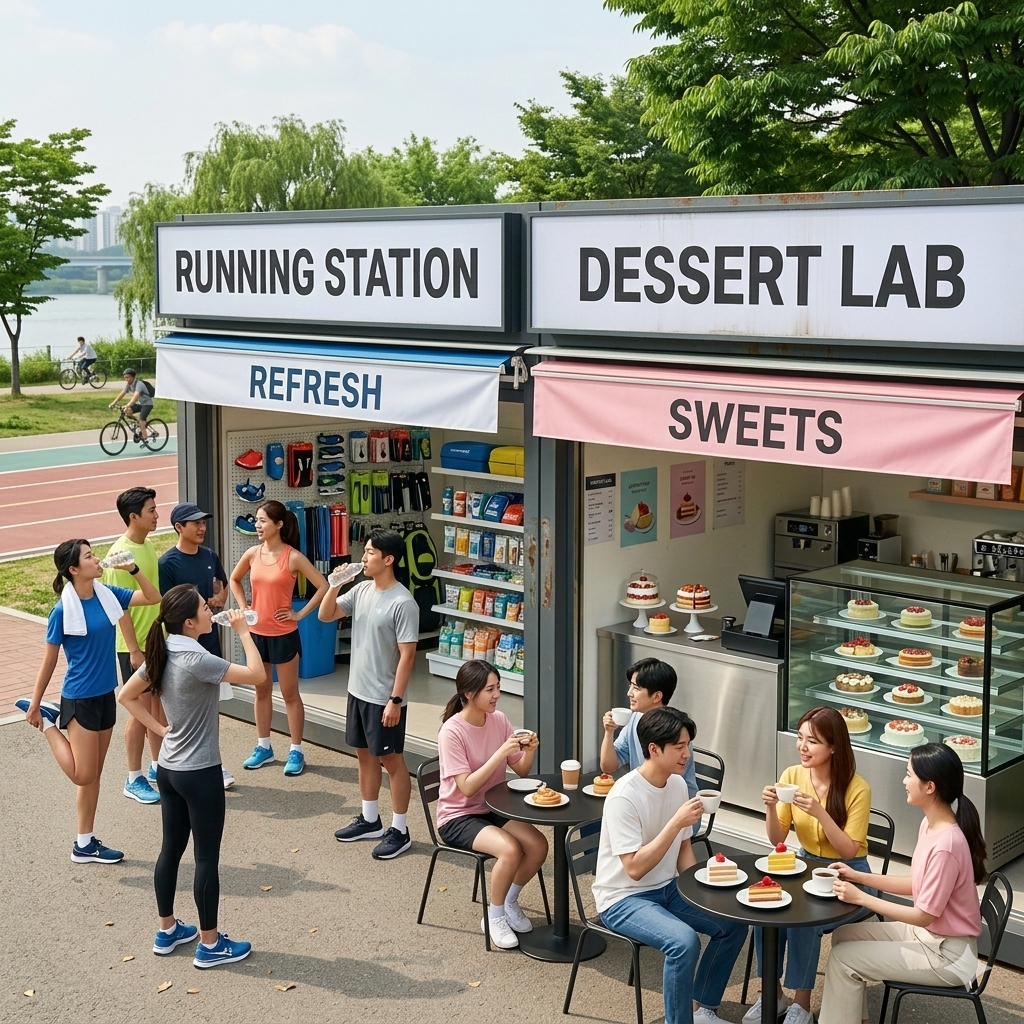
Two of the clearest examples are BGF Retail’s “CU Running Station” and Emart24’s “Dessert Lab Seoul Forest.” These are not just stores designed to sell more products. They are built as experience-driven platforms centered on exercise, food, and local culture. The Running Station is aimed at people who run along the Han River, while Dessert Lab is styled more like a dessert showroom or café reflecting the mood of Seongsu. Together, they show how Korean convenience stores are being reshaped for younger customers who value experiences and community as much as convenience.
The exterior of the CU Running Station stands out immediately, with a purple-and-lime “RUNNING STATION” sign and a design that echoes the lines of a running track. On the first floor, runners can find 25 storage lockers, along with gear such as Nike running items, headbands, running belts, and towels. Nearby shelves are stocked with protein drinks, energy gel, and protein bars for recovery after a workout. The idea is simple: let runners handle both preparation and post-run recovery in one place.
The second floor shifts from retail to recovery. It includes changing rooms, a powder room, and a finish-line photo zone where people can take post-run pictures. There is also a pop-up area for HyperShell, a wearable robotics brand, where visitors can try out futuristic running gear. That blend of practical support and light entertainment is what makes the format different from a standard convenience store.
BGF Retail plans to expand the model beyond Yeouido to 18 more stores near Han River parks, including Magok, Mangwon, Banpo, Jamsil, and Ttukseom. The company is also preparing digital features through its Pocket CU app, including route guidance, running challenges, and rewards programs linked to running platforms. Instead of growing by store count alone, the chain is trying to build loyalty around a specific community and a repeat-use lifestyle. In other words, it is turning convenience stores into lifestyle hubs rather than just retail points.
Emart24’s Dessert Lab Seoul Forest, which opened in March, takes a different route but follows the same logic. The 94-square-meter store is divided into four zones: a Dessert Zone, a Special Dessert Zone, a Wine Pairing Zone, and a terrace styled to match the atmosphere of Seoul Forest. Visitors can browse trendy baked goods and sweets, discover limited collaboration items, and take photos in a space that feels far closer to a boutique dessert café than a traditional convenience store. The store invites people to linger, not just stop by.
Dessert Lab also leans heavily into local collaboration. Inside the store, digital signage introduces nearby workshops and restaurants in the Seongsu area, and related delivery services are offered with discounts. There is also a dedicated exhibition and sales corner for local artists and workshop brands. That makes the store feel less like an isolated chain outlet and more like a small neighborhood culture platform tied to its surroundings.
These concept stores are also built for social media visibility. The Running Station’s finish-line photo zone and Dessert Lab’s terrace are designed to encourage visitors to take pictures and share them online, which naturally turns customers into promoters. Running challenges and neighborhood tie-ins add another layer of participation and help bring people back. The strategy shows how convenience store operators are starting to think more like content brands, using space and experience as part of the product.
For overseas readers, it helps to understand that Korean convenience stores already play a much broader role than many people expect. They are open around the clock, deeply woven into urban life, and often function as places for meals, parcel services, bill payment, and quick errands. Stores like Running Station and Dessert Lab push that role even further by turning the convenience store into a place for exercise, leisure, and social interaction. It is also worth noting that CU, GS25, Seven-Eleven, and Emart24 are separate brands run by different companies, not branches of a single chain.
What is happening now suggests that Korean convenience stores are moving beyond the idea of being simple retail shops and becoming something closer to a third place. A runner can store their belongings, change, and recover in one of these spaces, while someone else can meet friends, enjoy dessert, and take photos in another. More themed formats centered on ramen, K-food, beauty, and wellness are likely to follow. For international readers interested in K-culture, this shift offers an unusually vivid look at how everyday retail in Korea is being redesigned around lifestyle itself.