The 'Ddujjonku' Craze: How Dubai Chocolate Was Reimagined as a Chewy Korean Dessert
Ddujjonku reworks Dubai chocolate into a chewy Korean dessert, and sellouts, stock maps, and convenience-store versions helped turn it into a craze.
Lately, one made-up word has been popping up everywhere in Korean cafes and convenience stores: “ddujjonku.” Short for what is often described as a Dubai-style chewy cookie, the dessert became popular enough to trigger early-morning queues, constant stock checks, and waves of sold-out posts online. As cafes, convenience stores, and even hotel restaurants began releasing their own versions, it started to look less like a passing snack fad and more like a full-fledged cultural moment.
“Ddujjonku” is a Korean nickname based on the phrase “Dubai chewy cookie,” but the dessert itself is a domestic reinterpretation inspired by the pistachio-filled Dubai chocolate that had already gone viral online. The usual version combines crisp toasted kadaif, the thin shredded pastry widely used in Middle Eastern desserts, with pistachio cream, then coats the outside in a soft marshmallow layer and a dusting of cocoa powder. Despite the word “cookie” in its name, many people say the texture feels closer to mochi or rice cake than to anything most English speakers would call a cookie.
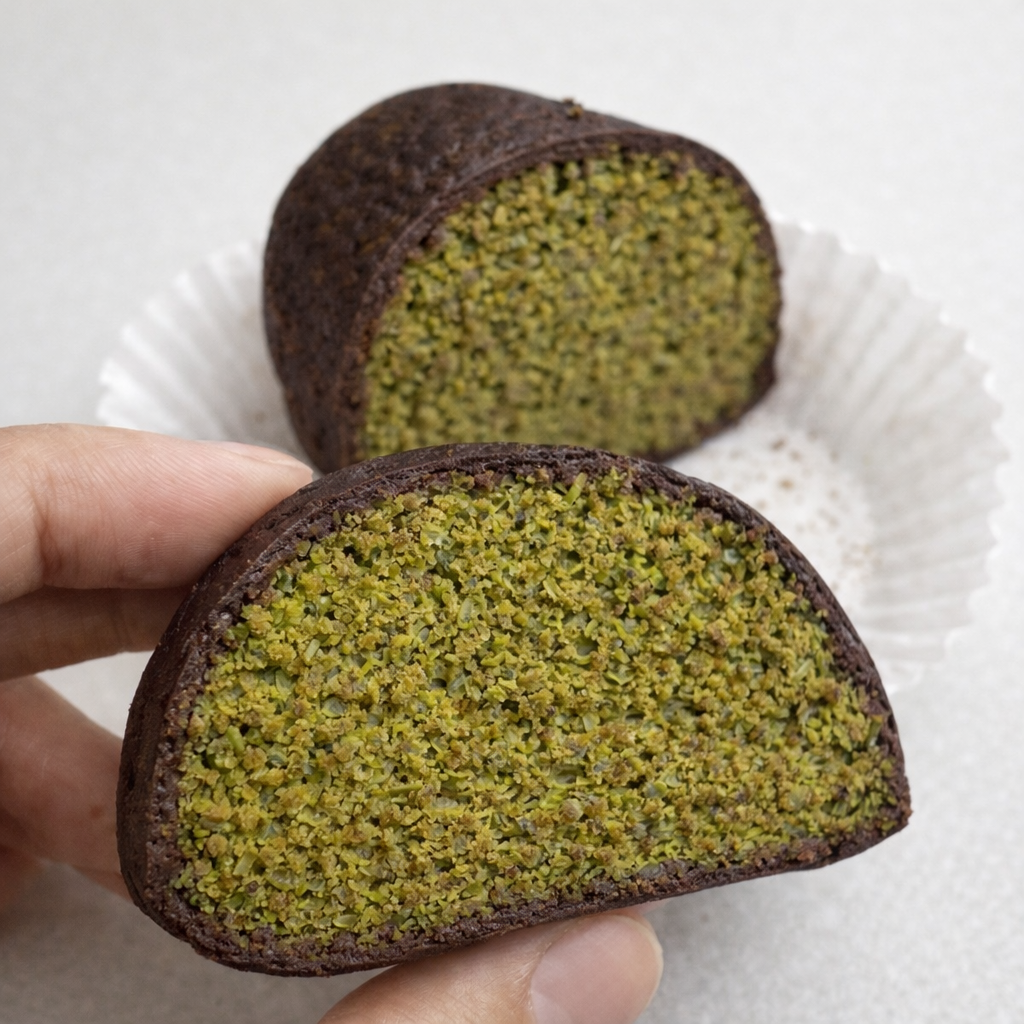
The dessert is generally understood to have emerged in Korea in 2024, when local pastry shops began adapting the Dubai chocolate trend into a format that better matched Korean tastes. While the original Dubai-style chocolate bar gained attention through social media, Korean creators focused on two things in particular: chewiness and bite-sized convenience. The marshmallow coating, once chilled and set, created a texture that reminded many Korean consumers of familiar chewy rice-based sweets. Its smaller size also made it easy to treat as a quick indulgence rather than a heavy dessert.
Social media played a huge role in turning that early curiosity into mass demand. Once a well-known idol posted a photo of ddujjonku on social media, searches jumped and hashtags multiplied almost overnight. Online, people began describing it with expressions like “crispy outside, chewy inside,” while short-form video platforms filled with cross-section shots showing the contrast between the crisp shell and the stretchy interior. Korean media often connected the boom to the country’s wider “open-run” culture, in which people line up early to buy limited popular items. Some buyers reportedly waited more than 30 minutes, especially at shops that limited purchases to two pieces per person.
Price and supply also helped intensify the hype. Ddujjonku is usually sold in the 5,000 to 10,000 won range, and because key ingredients such as kadaif and pistachio are imported and the production process is relatively hands-on, output is limited. That scarcity made the dessert feel like something people needed to try at least once before it disappeared. As supply concerns grew, so did the sense of urgency around it.
One especially Korean twist in the trend was the role of tech. A developer reportedly created a live stock map to help buy ddujjonku for a partner, and the service quickly grew into a platform used by hundreds of participating cafes. Shop owners could update inventory themselves, while users checked nearby sellers, remaining stock, and the latest update time on a map. Some people said the map helped them track down their first ddujjonku successfully; others complained that they still showed up too late. Either way, the map itself became part of the story and helped push the craze even further.
Retail chains moved quickly as well. Korean convenience stores began releasing products inspired by ddujjonku, effectively bringing the trend into the mainstream. CU launched chewy rice cakes and brownies using kadaif in October 2025 and reportedly sold more than 1.8 million related items within three months. GS25 and 7-Eleven released similar products, also seeing sharp sales growth. Hotel restaurants and department-store dessert boutiques joined in too, offering their own premium or ingredient-tweaked variations.
As the craze expanded, it also changed shopping behavior. Online marketplaces and big-box retailers saw spikes in sales of marshmallows, pistachios, and kadaif, while some consumers even started making large home batches in a playful trend nicknamed “ddujjonku kimjang,” borrowing the Korean word for large-scale seasonal kimchi-making. Korean media quoted experts saying the dessert had become a hot issue among younger consumers, but might also fade quickly because the ingredients are imported, the calories are high, and novelty-driven demand can cool fast. Analysts often framed the boom as a product of MZ-generation consumer psychology, scarcity-driven desire, and social media’s culture of display.
There are also a few points that can easily confuse overseas readers. Despite the name, ddujjonku is not a traditional dessert from Dubai or the UAE. It is a Korean reinterpretation that borrows key flavor elements from Dubai chocolate, especially pistachio and kadaif, and reworks them through Korea’s own preference for chewy textures and small-format sweets. You would have a hard time finding an identical dessert in Dubai itself. And because the term is used loosely, products sold under the same name can vary widely from shop to shop in texture, sweetness, and filling ratio.
In the end, the ddujjonku craze is not just about one new dessert. It is a clear example of how global food trends, local taste preferences, social media dynamics, and retail strategy can combine to create a hit in Korea. By translating the Dubai chocolate idea into something chewier, smaller, and more visually dramatic, Korean dessert makers created a product that felt both new and familiar. Stock maps, convenience-store spin-offs, and endless short-form videos did the rest. The heat of the trend may fade as supply stabilizes or the next dessert arrives, but for now, ddujjonku looks likely to remain one of the defining examples of how Korea localizes and amplifies global food crazes.