Eco-Maximalism and Circular Fashion: When Bold Sustainability Becomes Everyday Style
This article looks at how eco-maximalism, where upcycling meets vintage flair, and circular fashion, where resources move through rental, resale, and repair, are reshaping the way Korea’s MZ generation consumes fashion.
In 2026, Korea’s MZ generation is leaning into a new lifestyle that satisfies both environmental awareness and the desire for self-expression. Trend analysts describe this shift through two key ideas: eco-maximalism and circular fashion. For younger consumers who care about social values, what matters now is not just price or function, but how resources are used, reused, and made visible through style.
Eco-maximalism refers to a bold visual language built on sustainable materials and upcycling. Rather than settling for restrained or quietly virtuous eco-fashion, younger shoppers are drawn to vivid patterned dresses made from reclaimed fabric, oversized jackets reworked from upcycled denim, and colorful patchwork bags made from vintage textiles. Unlike earlier generations that often viewed secondhand or recycled goods with hesitation, they use these pieces to express individuality while embracing sustainability.
This aesthetic is no longer limited to clothing. It is spreading into interiors and everyday life, where repainting old furniture or decorating with vintage objects has become a natural part of how people shape their homes. Instead of muted palettes and minimalist restraint, contrasting colors and layered patterns now deliver visual pleasure while still resting on a foundation of reuse and eco-conscious choices.
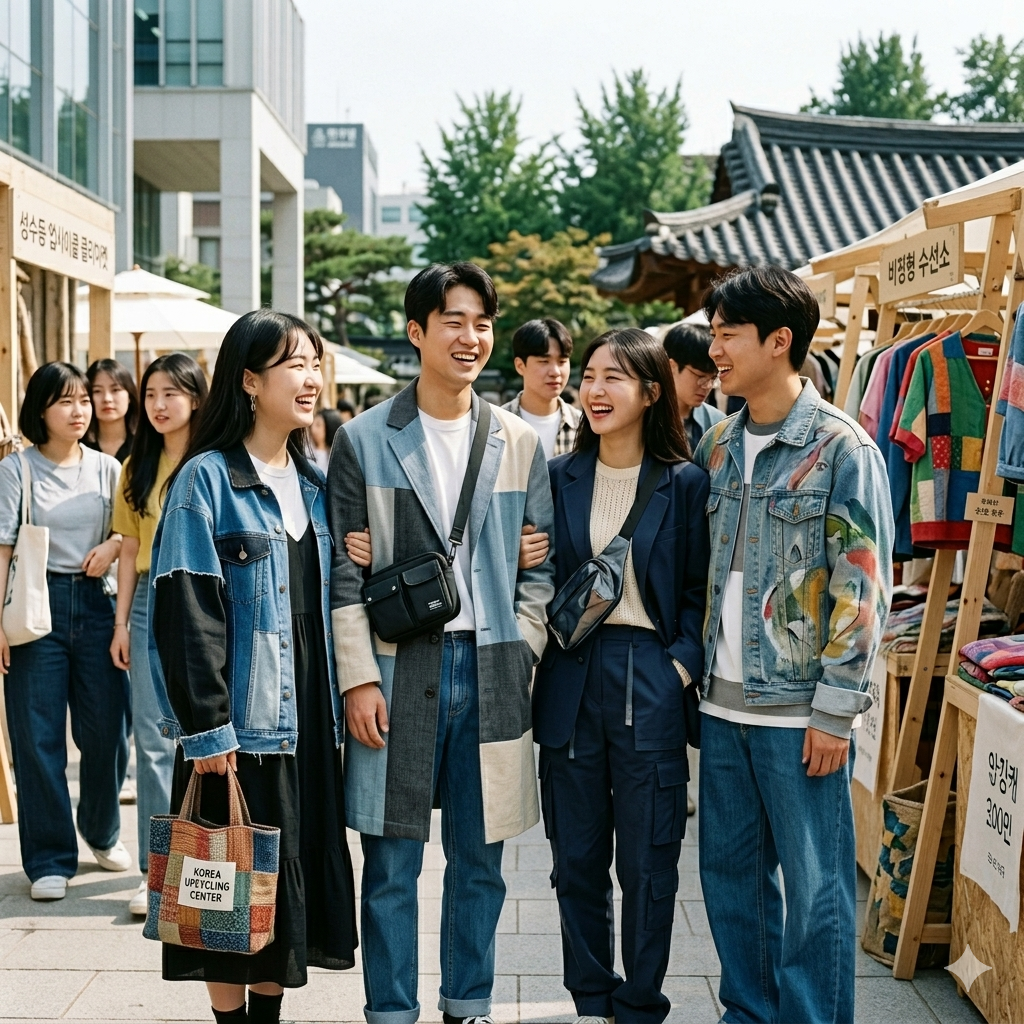
Circular fashion is about extending the life of clothing rather than consuming it once and discarding it. As clothing rental services and resale platforms expand, borrowing, reselling, and repairing garments has become increasingly ordinary. What is taking shape is more than a secondhand boom; it is a broader cultural shift toward keeping materials in motion for as long as possible.
MZ consumers are at the center of that change. It is now common to see people browse vintage stores in Seongsu for one-of-a-kind pieces or resell a bag online to fund their next purchase. Ownership matters less than experience and circulation, and the idea of swapping, mending, and reusing instead of throwing away feels increasingly intuitive.
Brands are responding by building durability and repairability into products from the start. As more consumers look for garments that keep their shape over time and can be easily maintained, companies that offer transparent production processes and long-term service are earning trust. Sustainability is no longer just a branding message; it is becoming a survival strategy.
For international readers, one possible point of confusion is how eco-maximalism differs from traditional maximalism. Ordinary maximalism is centered on visual excess itself, while eco-maximalism begins with recycled materials and environmental intent, then pushes style in a more daring direction. Circular fashion, meanwhile, is not just about used clothing, but about managing the full life cycle of garments through rental, resale, and repair.
Together, these shifts are broadening the idea that sustainability and self-expression do not have to compete. Through eco-maximalism and circular fashion, Korea’s MZ generation is pursuing responsible consumption and distinctive style at the same time, reshaping both the fashion industry and everyday culture. As the trend continues to spread, it points toward a new fashion ecosystem where sustainable values and creative design can thrive side by side.