Why PDRN Is Back in the Spotlight: Toner Pads Meet 'Salmon DNA'
PDRN toner pads are turning a clinic-linked salmon-DNA ingredient into a mainstream skincare trend, raising global interest in Korea's beauty market.
In Korean beauty communities, one combination has been drawing renewed attention: PDRN, a skin-repair ingredient derived from salmon DNA, and the toner pad format. A material once associated mainly with clinic treatments has now entered everyday skincare, and social media buzz has been strong enough to send some products—nicknamed “salmon tear pads”—into repeated sellouts. Department stores and drugstores in Korea have reportedly posted sold-out notices for related items as interest surged. For overseas readers, the trend may seem a bit unusual at first, so it helps to look at both what PDRN is and how it spread.
PDRN stands for polydeoxyribonucleotide, a purified DNA fragment typically derived from salmon. Experts say it is associated with skin recovery, barrier support, and soothing benefits. Because the phrase “salmon DNA” can sound off-putting, some consumers initially react with hesitation. In practice, however, cosmetic formulations use a refined active material rather than raw biological tissue, and brands tend to emphasize its gentle feel on the skin. That image of being both “science-backed” and “skin-friendly” is one reason PDRN has moved from injectable medical use into everyday products such as serums, creams, and now even pads.
The other half of the equation is the toner pad format. Toner pads are cotton or gel pads that come pre-soaked in toner or essence, allowing users to swipe, pat, or briefly leave them on the skin without having to dispense product by hand. They are popular because they make hydration and light exfoliation feel simple and low-effort. Riding that convenience factor, APR’s Medicube brand has sold more than 20 million toner pad products worldwide, with over 70 percent of those sales coming from overseas markets. Its best-known item, the Zero Pore Pad, reportedly held the No. 1 spot in Amazon’s toner category for more than a year, and the brand later expanded the lineup with products such as the Deep Vita C Pad, the Red Succinic Pad, soothing pads featuring exosomes, and PDRN gel pads.
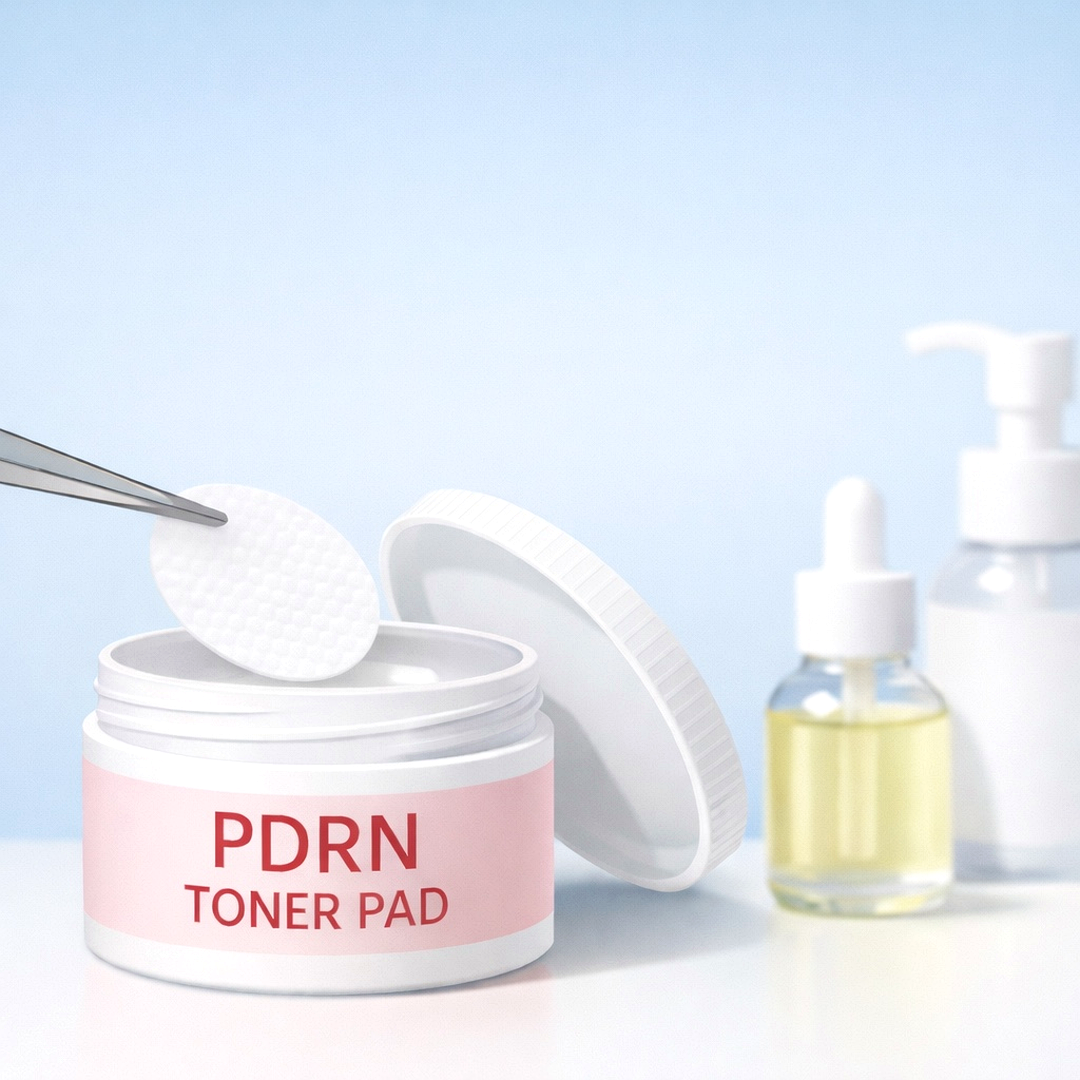
There are two main reasons PDRN toner pads and gel pads have become such a talking point. The first is the pairing of a clinical-sounding ingredient with an everyday skincare format. PDRN is widely recognized as a regenerative ingredient associated with medical and aesthetic settings, so putting it into a soft gel pad or toner pad makes it feel both advanced and accessible. Korean media reported that Medicube began expanding its PDRN lineup in June 2025, building it into a broader skincare category. As word spread around its anti-aging and firming claims, reports said the PDRN line alone reached 15 million cumulative units sold globally within a year of launch. The brand then broadened the range further with products such as a PDRN Pink Collagen Gel Mask, filler ampoules, toner, serum, moisturizer, sunscreen, and mist.
The second reason is how the trend spread. PDRN entered the mainstream more quickly after videos featuring dermatologists went viral on social media, with some clips claiming that PDRN artificial tears could support skin recovery when applied topically. As those videos circulated, PDRN eye drops sold out, and masks and pads featuring “salmon DNA” began to take shape as a trend category of their own. Celebrity visibility added even more momentum. When model Hailey Bieber posted a photo of herself using Medicube’s PDRN Pink Collagen Gel Mask, TikTok and Instagram quickly filled with users trying the same product, and searches and reviews surged. That kind of viral exposure, combined with rapid product expansion, helped turn PDRN pads into a global K-beauty talking point.
There are also a few points that international consumers may misunderstand. PDRN is sometimes introduced in sensational terms as “salmon sperm DNA,” but the ingredient used in cosmetics is a purified DNA fragment, not a raw biological material with odor or the kind of risks consumers may imagine. Usage also differs by product. Most toner pads are meant to be used for a few minutes, while Medicube’s Pink Collagen Gel Mask is designed to stay on for around four hours so that the active ingredients can be fully absorbed. Results will vary depending on skin condition, and it is more realistic to expect supportive hydration and soothing benefits than clinic-level transformation. It is also worth noting that some brands are now introducing plant-based alternatives, such as ginseng-derived PDRN, for consumers who prefer to avoid animal-derived ingredients.
In the end, Korea’s renewed PDRN boom reflects a familiar K-beauty formula: take a high-interest ingredient, package it in an easy daily format, and let social media accelerate the story. By moving a clinic-associated “salmon DNA” ingredient into toner pads, masks, and ampoules, brands turned regeneration and firmness into something consumers could try at home with minimal effort. Convenience, visual appeal, and celebrity buzz did the rest. More than just a hit product story, the rise of PDRN toner pads shows how the Korean beauty industry continues to create global trends by combining new ingredients with highly adaptable product formats.