Running Crews and Korea's New 'Run Economy'
In Korea, running has grown far beyond fitness. It is now shaping social communities, travel habits, and consumer markets. Here's how running crews and the broader running economy took off.
These days, it is hard to walk through a Korean city or park without seeing runners. Social media is full of race logs, running selfies, and hashtags that turn everyday workouts into something public and shareable. What was once seen mostly as a solo form of exercise has become a visible part of urban culture, especially among younger people. As participation has grown, so has the language around it: alongside running crews, Korea has also embraced the idea of a “run economy,” a term used to describe the expanding market built around running culture.
Running crews are one of the clearest signs of that shift. They turn an individual activity into something social. Some meet before sunrise, some combine running with mindfulness, and others are designed for women only or for runners with specific pace goals. Most organize through social media, where members share schedules, routes, and photos after each session. That structure gives people both motivation and a sense of belonging, which helps explain why running has spread far beyond serious athletes to include office workers, casual exercisers, and people who might never have joined a sports club in the traditional sense.
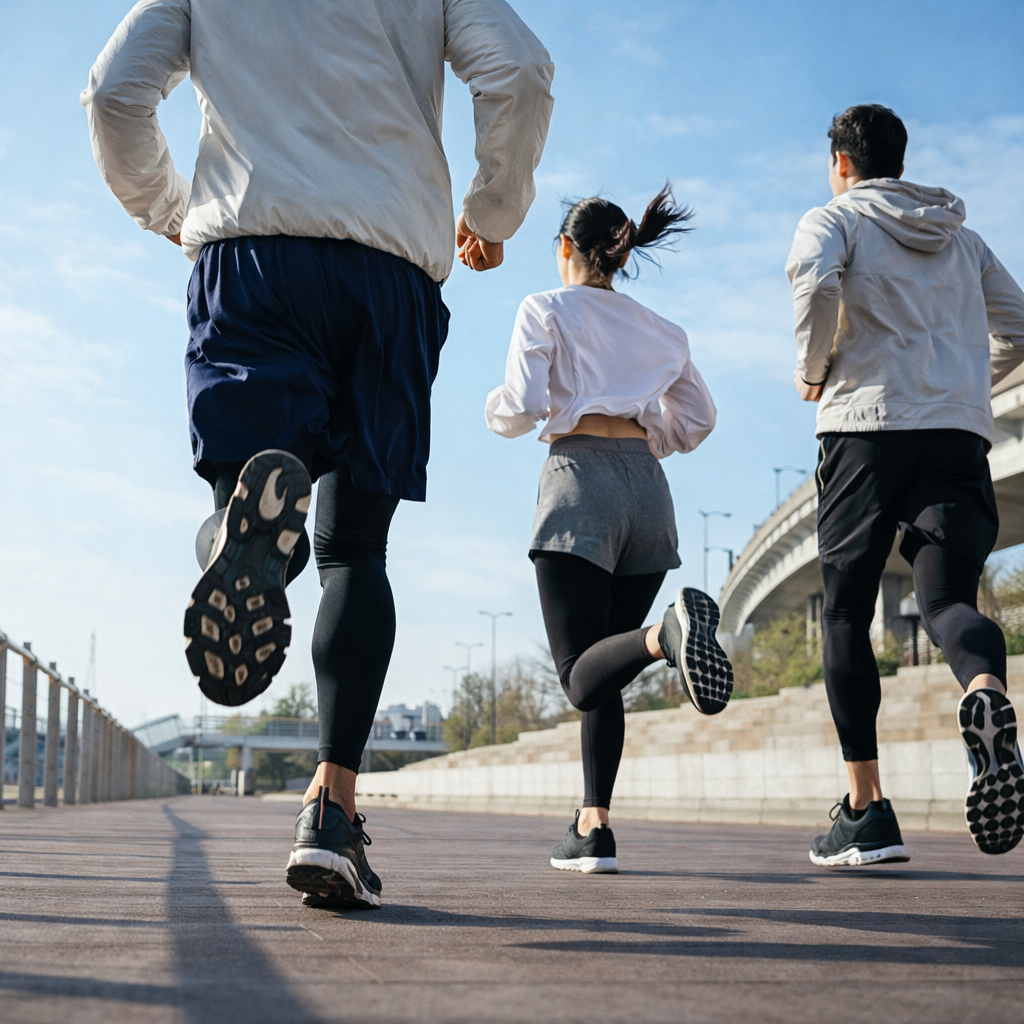
The rise of running culture accelerated after the pandemic, when outdoor exercise became more appealing and more practical than indoor alternatives. Running fit that moment perfectly: it was inexpensive, flexible, and easy to begin. At the same time, social media helped turn it into something more expressive. Posting split times, group photos, and even GPS art created from running routes made the activity feel creative as well as healthy. In that environment, running stopped being seen as just training and started to look like a lifestyle.
That shift is also changing the way people travel. As races multiplied across the country, many runners began planning trips around events, giving rise to what is often called a “run trip” culture. Coastal cities such as Busan and Jeju have become especially attractive because they can pair race participation with sightseeing, food, and short getaways. Travel companies have also started building packages that combine marathons with leisure travel, including trips abroad. For many runners, a race is no longer just a competition. It is a reason to visit a new place.
The business side of this trend has grown just as quickly. Running shoes, apparel, watches, supplements, and accessories are all benefiting from the boom. High-performance shoes with premium materials and carbon plates have become especially sought after, and some models sell out almost immediately after launch. What is notable is that the strongest growth is no longer limited to runners in their twenties. Consumer data suggest that people in their thirties and forties are also spending heavily on running-related products, which shows how broad the market has become.
Large races have turned into events in their own right. Some of Korea’s most popular marathons now attract tens of thousands of applicants, with entries selling out in minutes. For many participants, joining a major race carries some of the same excitement as securing a hard-to-get concert ticket. At the same time, the rapid increase in events has created friction in some cities, especially when road closures affect weekend traffic and daily routines. That tension is part of what happens when a leisure trend grows large enough to reshape public space.
For international visitors, one thing worth knowing is that running crews in Korea are usually informal and highly accessible. They are not typically rigid athletic clubs with complicated membership rules. Many announce their meetups through Instagram or other social platforms, and newcomers are often welcome. That openness is one reason the culture has spread so quickly. Still, because these groups use public roads, riverside paths, and parks, good etiquette matters. Paying attention to safety, sharing space with pedestrians, and checking for race-day traffic controls are all part of the experience.
In the end, Korea’s running boom is about more than exercise. It has created new social networks, influenced travel patterns, and fueled an expanding consumer market. Running crews, run trips, and performance gear are all part of the same larger story: running has become one of the ways people build identity, community, and daily rhythm. For travelers visiting Korea, joining a run or even just watching this culture in motion can offer a surprisingly vivid glimpse of contemporary urban life.