Why Samanco Is Trending at Costco in the U.S.: How a Fish-Shaped K-Ice Cream Went Global
Samanco, a fish-shaped Korean monaka ice cream, became a Costco favorite in the U.S., showing how familiar visuals and mass retail can accelerate global reach.
A Korean ice cream has been drawing fresh attention in the freezer aisles of Costco in the United States. What stands out is the fish-shaped packaging showing up in shopping carts, as American shoppers discover an unfamiliar frozen treat, photograph it, and share it on social media. The product is Binggrae’s “Samanco,” a long-running favorite in Korea for more than 30 years. Now that it is being sold in large multipacks at major U.S. stores, many local shoppers are starting to talk about it as a kind of new freezer staple.
Samanco is a monaka-style ice cream that Binggrae first introduced in 1991. The idea was simple but clever: take the familiar shape of bung-eo-ppang, a fish-shaped pastry traditionally associated with winter, and turn it into something people could enjoy in summer. The outer shell resembles the wafer pastry of fish-shaped bread, while the inside is filled with vanilla ice cream and sweet red bean syrup, creating a mix of creamy, nutty, and sweet flavors. The name itself comes from a playful Korean expression suggesting that it is affordable, tasty, and satisfying. More recently, the lineup has expanded with flavors such as chocolate and strawberry to suit a wider range of tastes in Korea and abroad.
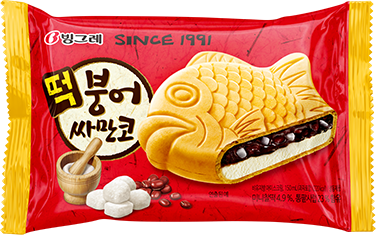
Binggrae’s overseas expansion has played a major role in bringing this long-running snack to global markets. The company operates overseas entities in the United States, China, and Vietnam and exports ice cream to more than 30 countries. By the third quarter of 2025, sales at its U.S. subsidiary had reportedly reached KRW 81.5 billion on a cumulative basis, already surpassing the full previous year’s figure. Among its export lineup, Melona and Samanco have become especially important products in North America and Canada. As K-ice cream built a broader international foothold, Samanco rose alongside it.
In January 2026, Costco in the United States began selling the product under the name “Binggrae Samanco Frozen Dairy Desserts” in a bulk pack format. The 12-count variety pack includes four strawberry, four chocolate, and four traditional red bean units. With its distinctive shape and family-friendly packaging, it is easy for shoppers to toss into a cart. Many customers have since posted reviews comparing all three flavors, while local media have introduced it as a fish-shaped wafer cone dessert layered with ice cream and syrup, often comparing it to taiyaki-inspired sweets. That framing helped position Samanco as both novel and approachable.
American shoppers are not drawn to it only because it looks cute. The contrast between the crisp outer wafer and the soft ice cream filling makes it fun to eat, while the three flavors help cover different preferences within a household. There is also the Costco effect. In some stores, the product appeared with Costco’s well-known asterisk on the price tag, a sign many shoppers interpret as meaning restocks may not be guaranteed once the product is gone. That sense of limited availability made it feel even more desirable. Reviews posted by social media accounts such as Costco Buys picked up large numbers of views, helping spread the idea that Samanco was something worth grabbing on the next Costco run.
For first-time overseas buyers, the most unfamiliar elements are usually the fish shape and the red bean filling. Because of the shape, some people initially assume it might contain actual fish, but it does not. Like Korean fish-shaped pastry, the fish is purely visual. It is a dessert shell filled with ice cream and syrup, not seafood. The red bean syrup can also seem unusual at first, but in texture and sweetness it works more like a familiar dessert filling than something savory. Once those points are understood, Samanco starts to read less like a novelty item and more like a Korean frozen dessert that blends tradition and modern snack culture.
Korean media have explained Samanco’s quick sell-through at Costco as the result of several factors coming together: its unusual appearance for local shoppers, a flavor profile that feels new but accessible, family-sized packaging, and strong word-of-mouth on social media. Some observers also note that while the U.S. ice cream market is still dominated by bars, pints, and soft-style formats, a fish-shaped monaka product like Samanco offers a noticeably different experience. Binggrae’s U.S. arm has also said it plans to keep expanding distribution beyond Asian supermarkets and further into mainstream American retail channels.
Back in Korea, Samanco has remained a dependable steady seller for years. In the first half of 2024, it ranked No. 1 in Korea’s monaka-style ice cream category, and the category continued to post growth year over year. Korean food export research has also identified Samanco, along with Melona, as one of the Korean ice creams that sells especially well overseas, including in markets such as Vietnam and other parts of Southeast Asia where its fish shape is seen as distinctive and hard to replace locally. That helps explain why Samanco is not just going through a brief viral moment, but benefiting from long-term product strength.
In the end, Samanco’s rise in Costco freezers is not really the story of a random novelty item. It is the story of a long-loved Korean classic being rediscovered through global retail. A fish-shaped ice cream born in the early 1990s has found new life through Binggrae’s international strategy, the larger rise of K-ice cream, and a social media environment that rewards products that feel both photogenic and culturally specific. Variety packs, viral reviews, and the hint of scarcity helped create momentum. What happens next will depend on whether that attention spreads beyond Costco into an even wider range of retail channels.