Why Sephora x Olive Young's K-Beauty Zone Is Making Waves in Korea: How Retail Innovation Is Taking K-Beauty Global
Sephora and Olive Young's K-Beauty Zone shows how Korean beauty is moving from trend status into mainstream global retail distribution.
In Korea, the partnership between Sephora and Olive Young has become a major talking point among K-beauty fans. What makes it especially notable is that this is not about a single product launch, but about creating a dedicated “K-Beauty Zone” inside a major global retail network. That shift suggests K-beauty is moving beyond trend status and becoming a core category in the global beauty market.
The K-Beauty Zone will take the form of a shop-in-shop concept inside Sephora stores. Olive Young, Korea’s leading health-and-beauty retailer, will curate a lineup of brands and products that have already proven successful in the domestic market and present them in dedicated Sephora displays. The goal is to give local shoppers a more direct experience of Korean beauty culture. The two companies announced the initiative in mid-January 2026, and because Sephora operates roughly 3,400 stores across 35 countries, the distribution impact is expected to be significant.
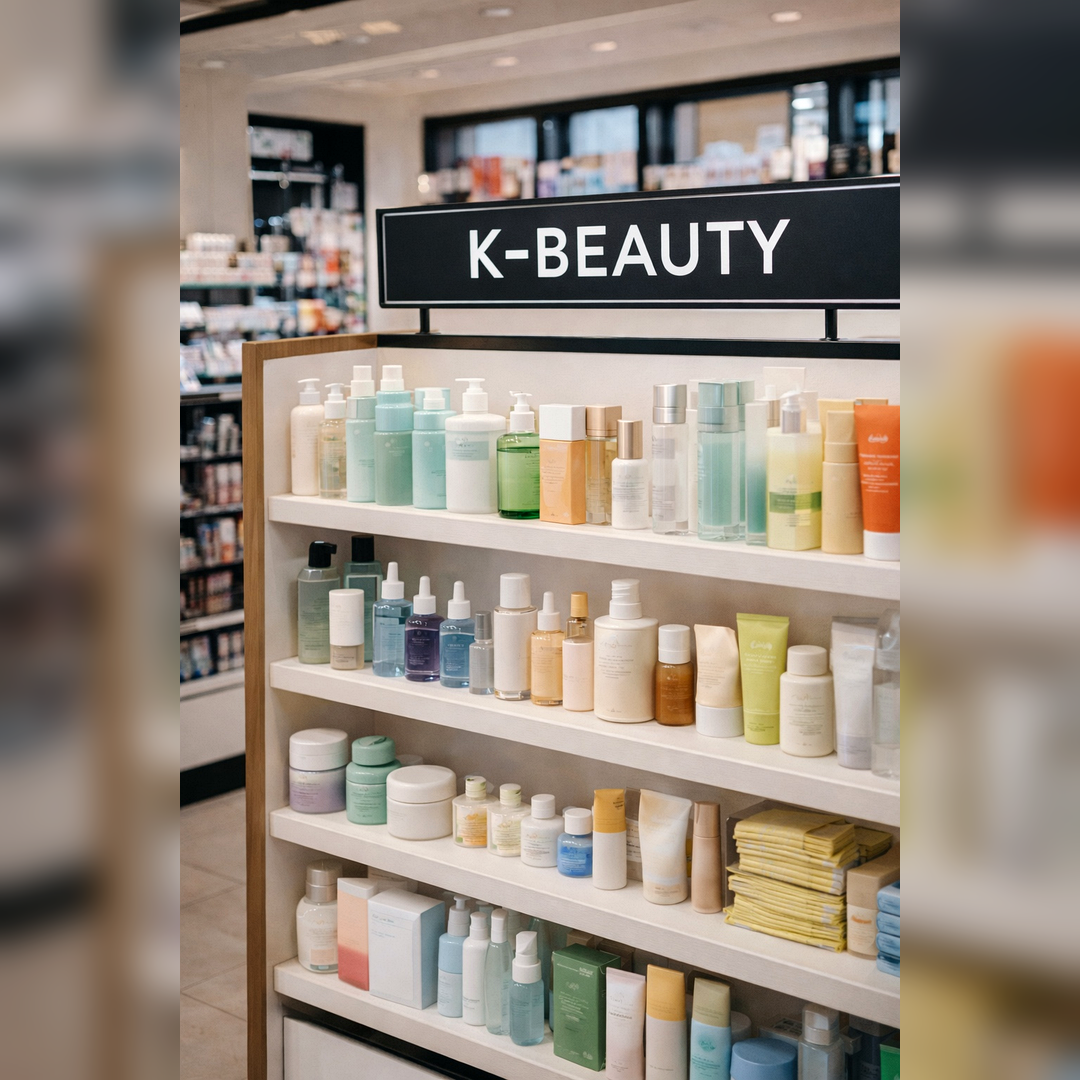
According to the official announcement, the K-Beauty Zone will first roll out in the second half of 2026 through Sephora’s online and offline channels in six markets: the United States and Canada in North America, along with Singapore, Malaysia, Thailand, and Hong Kong in Asia. From there, the plan is to expand into other Sephora markets, including the Middle East, the UK, and Australia. For Olive Young, the project is a way to rapidly increase global consumer touchpoints for K-beauty without having to build every market from scratch.
That helps explain why Olive Young chose to partner with Sephora rather than simply accelerate its own overseas store expansion. The company appears to see Sephora’s existing retail network as the fastest and most efficient way to respond to growing international demand using products that have already been validated in Korea. This is more than a standard supply arrangement. Olive Young is expected to play the role of a K-beauty curator, shaping product selection, merchandising, and marketing direction, while Sephora provides the retail space and local sales infrastructure.
Korean beauty industry outlet Cosmorning reported that Olive Young sees this partnership as a way to introduce small and indie brands to the global stage. The company is expected to launch the K-Beauty Zone across six markets in North America and Asia in the second half of the year, then expand into regions such as the Middle East, the UK, and Australia. Olive Young also plans to build on the marketing know-how it has developed through KCON and beauty award campaigns, suggesting that the initiative will involve more than shelf placement alone. Sephora’s vast store network and e-commerce platform could open new paths to market for beauty startups and independent brands that previously had limited global access.
Olive Young has said that, by combining its global mall, its U.S. corporate presence, and Sephora’s retail network, it aims to build a more stable K-beauty ecosystem and support sustained growth in international markets. Sephora Global CMO Priya Venkatesh also highlighted the fast rise of K-beauty on the global stage, describing it as a category defined by innovation and originality. She noted that Sephora first introduced K-beauty to North America in 2010 and has continued growing that business ever since. Through this partnership with Olive Young, the company says it hopes to deliver a more differentiated product assortment and shopping experience.
Separate from the Sephora partnership, Olive Young is also planning to open its first U.S. flagship store in Los Angeles in May 2026. The location is expected to serve as an experiential retail space equipped with AI-powered skin and scalp analysis tools, linking in-store discovery with online shopping in an omnichannel format. Additional stores in the United States and Canada are reportedly in the works as well. Taken together, the Sephora collaboration and Olive Young’s own retail expansion look like a two-track strategy to deepen K-beauty awareness in North America.
International readers may be tempted to see this partnership as a passing trend, or even misunderstand it as an acquisition. But the two companies remain independent brands. The K-Beauty Zone is better understood as a curated retail space shaped by Olive Young within Sephora’s store environment. The timing and scale of the rollout may vary by country depending on store count and local market conditions, so the exact shopping experience and product mix could differ from one region to another.
Ultimately, the Sephora x Olive Young K-Beauty Zone is significant because it symbolizes Korean beauty’s entry into the mainstream architecture of global retail. By creating a structure in which proven domestic products and indie brands can reach overseas shoppers through an established distribution giant, the partnership could accelerate growth while lowering barriers to international expansion. More broadly, it reflects how K-beauty is evolving from a trend-led export story into a durable global category with staying power.